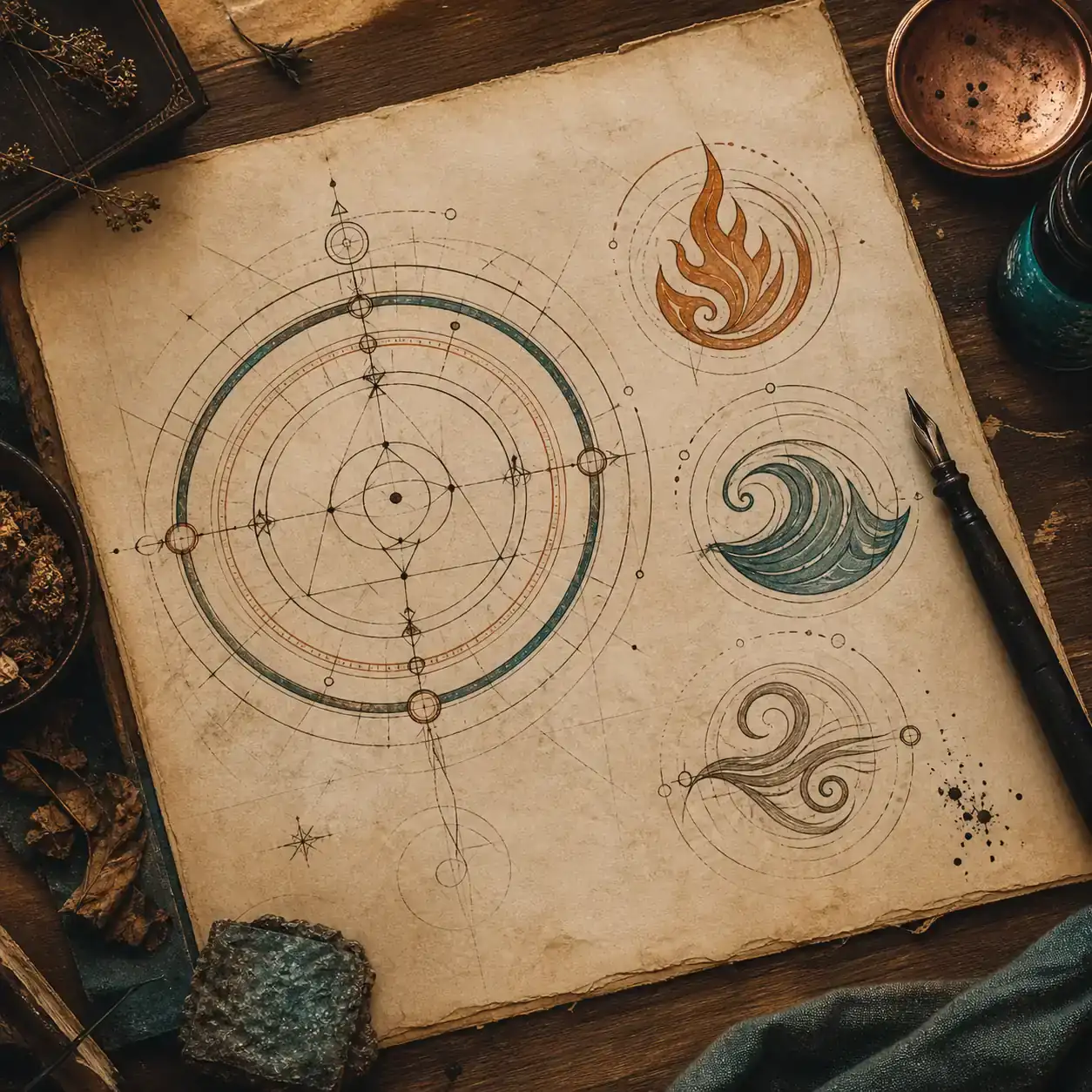
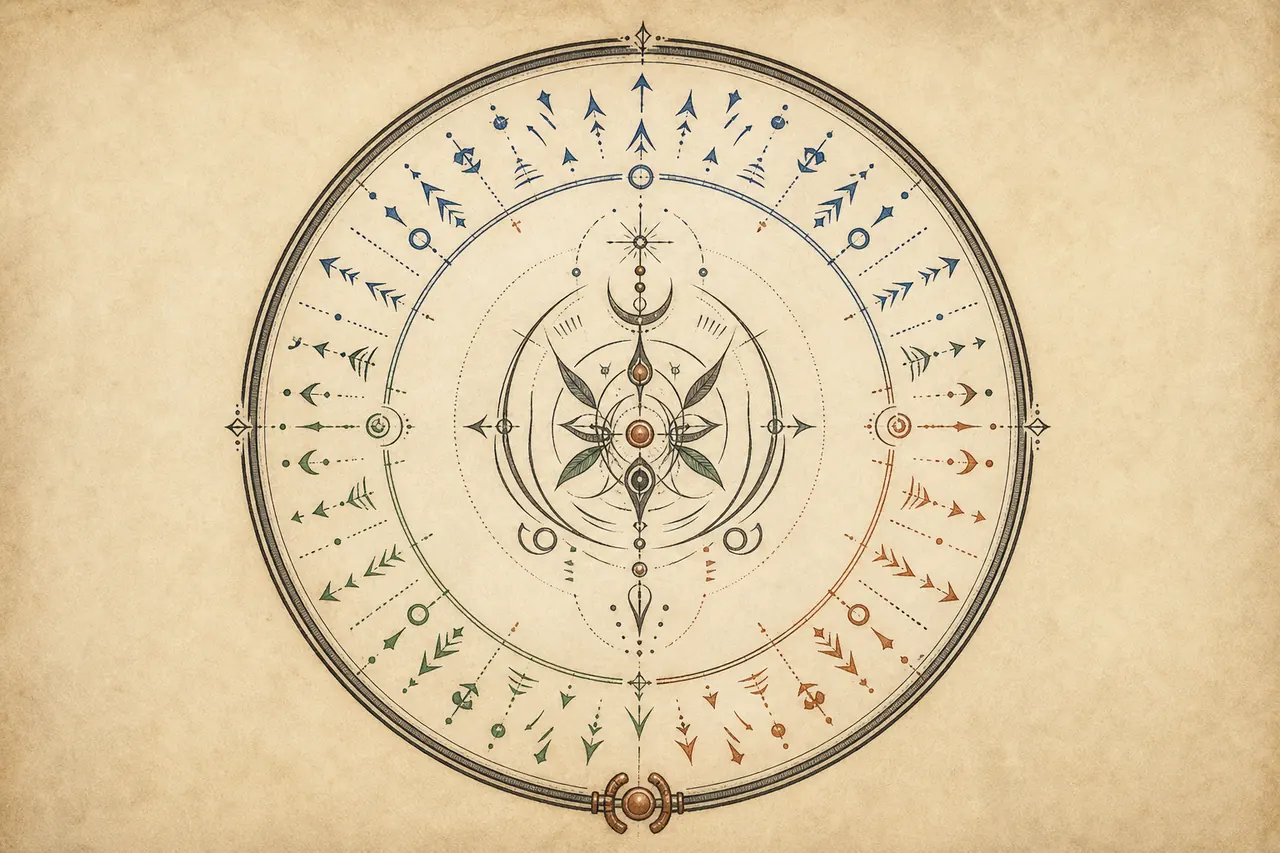
Witch Hat Atelier spells are best understood as drawn instructions. A circle is not simply a pretty emblem and a spell list is not just a collection of attack names. The meaning comes from how marks are placed together, what the design is meant to affect, and when the enclosing boundary is completed. That is why two circles can look similar while describing very different actions.
What is the Witch Hat Atelier spells list?
There is no single official checklist that turns every visible circle into a named, game-like ability list. The story treats magic as a written craft, so readers often search for categories such as water spells, light spells, transformation magic, doors, healing, or restricted techniques. Those labels are useful for finding scenes and discussing the setting, but they should not automatically be presented as official spell names.
A reliable guide therefore does three things: it identifies the kind of effect being discussed, explains whether the wording is canon or community shorthand, and tells you whether a fan tool is demonstrating the same idea or only borrowing the visual language. That distinction prevents a simulator preset from being mistaken for a published spell.
What counts as a spell in Witch Hat Atelier?
At the beginner level, a spell has a purpose, a medium, an arrangement, and a release condition. The witch needs the right ink and a controlled way to draw. The central design communicates a substance, force, or transformation, while surrounding signs can change movement, spread, direction, or other behavior. The circle gives the drawing a boundary and, in many explanations, closing that boundary is the decisive moment.
| Layer | What it contributes | How to describe it safely |
|---|---|---|
| Effect or substance | The thing the spell creates, moves, changes, illuminates, or transforms. | Use a broad category when the source does not provide a formal name. |
| Supporting signs | Direction, motion, levitation, concentration, spread, or another behavior. | Describe the function shown in the scene; do not invent a fixed dictionary. |
| Circle boundary | Connects the marks and controls when the instruction is released. | Explain the visible closure without claiming every circle follows one identical rule. |
| Context and limits | Ink, surface, knowledge, safety, training, and restrictions shape the result. | Keep story ethics and fan-tool rules separate from each other. |
Witch Hat Atelier spells: a practical list of categories
The table below is a navigation aid, not a claim that every row is an official spell title. It groups the kinds of magic readers commonly want to identify and shows what this site can demonstrate without pretending to reproduce the full canon.
| Search-friendly category | What readers usually mean | What this site can show |
|---|---|---|
| Water spells | Circles that create, move, hold, or shape water-like effects. | The simulator includes an original Water Orb preset and a Water sigil. |
| Fire or heat spells | Flame, heat, or directional force used as an elemental example. | The original Fire Shoot preset demonstrates Fire plus Column signs. |
| Wind and movement | Air, motion, lift, or a change in how an effect travels. | Wind is in the local recognition dictionary; the animation is a fan interpretation. |
| Light and visibility | Illumination or visual effects built from a light-related concept. | Light is supported as a primary sigil, not as a canon spell catalogue. |
| Transformation and body effects | High-risk or spoiler-sensitive changes to matter or bodies. | Not reproduced as a canon database; discuss with caution and use official sources. |
| Fan-made custom spells | Reader-created circles, original glyphs, or community naming. | The simulator lets you experiment within a small original dictionary. |
Use the phrase spell list to find this overview, then move to the sigil reference for the exact symbols that the browser tool recognizes. The two pages serve different jobs: one explains the setting and search intent, while the other documents a small interactive vocabulary.
How to read Witch Hat Atelier magic circles
Read from the inside out. First ask what the central mark appears to communicate. Next look at the signs around it: are they changing direction, reducing gravity, narrowing a stream, or simply completing the design? Finally inspect the outer boundary and the order in which the lines were drawn. A circle becomes easier to discuss when you describe relationships rather than guessing a dramatic name.
- Identify the intended effect. Is the drawing making, moving, shaping, revealing, or transforming something?
- Separate the layers. Do not treat every small mark as a different spell; some marks may be modifiers or construction guides.
- Check the medium and surface. Ink, a wall, a tool, a door, or a body can change the risk and context.
- Look for the release point. A completed boundary may be the moment the instruction becomes active, but avoid turning a simplified explanation into a universal canon law.
- Label uncertainty. If a name comes from a fan wiki or forum, call it community terminology rather than an official title.
This approach also explains why “magic circles” and “magic symbols” are useful related searches but not interchangeable with a full spell. A symbol is one component. A spell is the component, its placement, its purpose, its constraints, and its completed relationship with the rest of the design.
Canon spells versus fan-made examples
Witch Hat Atelier has a rich visual vocabulary, and fan communities naturally create short names for scenes that do not receive a formal label. That vocabulary is valuable, but a trustworthy wiki-style page should mark the difference between a term printed in an official release, a description inferred from a scene, and an original name created by a fan.
On this site, Fire Shoot and Water Orb are simulator presets. They are useful practice patterns, not official spell names. The five primary elements and three modifier signs are part of the browser tool's local dictionary. They let you explore recognition, direction, stability, and animation without claiming that the underlying rules are the complete magic system of the series.
How the fan simulator maps spells
The WHA Spell Simulator is intentionally smaller than the fiction. It captures strokes in the browser, detects an enclosing ring, groups interior marks, compares them with local geometric templates, compiles a structured spell result, and renders an animated effect. The page can therefore demonstrate the idea of assembling a circle while remaining honest about what it does not know.
For the actual tool workflow, use the working spell examples, then follow the drawing guide if the browser does not recognize a line. The technical explanation covers parsing and rendering; the separate magic guide covers the broader story concept.
How to make a readable custom circle
Searches for “how to make your own Witch Hat Atelier spells” usually mix creative writing, fan art, and requests for a working interactive tool. You can serve all three without pretending a homemade circle is official. Start with one clear effect, choose a single primary motif, leave space between the central mark and modifiers, and close the outer ring only after the interior is complete.
- Keep the outer ring large enough that the browser can distinguish it from the interior.
- Use one primary sigil and add modifiers deliberately instead of filling empty space with decorative strokes.
- Change one variable at a time so you can tell whether direction, stability, or recognition changed.
- Save a local PNG when a result is worth keeping; the simulator does not create an editable project file.
- Label your result as fan-made or illustrative when sharing it outside the tool.
Witch Hat Atelier spells FAQ
Is there an official Witch Hat Atelier spell list?
There is not one universal game-style list that names every circle shown across the story. Use official releases for canon details and treat community labels as descriptions unless an official source confirms the name.
What are the spells in the WHA Spell Simulator?
The simulator currently offers original Fire Shoot and Water Orb presets and recognizes five elemental sigils with three modifier signs. These are fan-tool examples, not canon spell names.
Are magic circles and sigils the same thing?
No. A sigil or sign is one visual component. A magic circle is the larger arrangement, and a spell is the intended instruction formed by the components and their relationships.
Can I make my own Witch Hat Atelier spell?
Yes, as a fan-made drawing or experiment. Use the simulator's supported dictionary for an interactive result, or create an original circle and label it clearly as your own interpretation.
Is the Witch Hat Atelier spell simulator official?
No. It is an unofficial fan-made browser experiment. Its parser, sigils, effects, quality values, and stability values are site-specific software rules.
Summary
The useful way to read Witch Hat Atelier spells is to connect effect, medium, signs, circle boundary, and context. A spell list should help readers navigate categories without inventing official names; a magic-circle guide should explain relationships without turning a fan diagram into canon. Use this page for the overview, the existing references for individual symbols and drawing practice, and the simulator for a clearly labeled interactive interpretation.
Official anime trailer embedded for visual context; it is not a walkthrough of this fan simulator.
Sources and further reading
- Official Witch Hat Atelier anime page — first-party promotional and trailer context.
- Witch Hat Atelier Wiki: Magic — community-maintained terminology; verify important story details against official releases.